

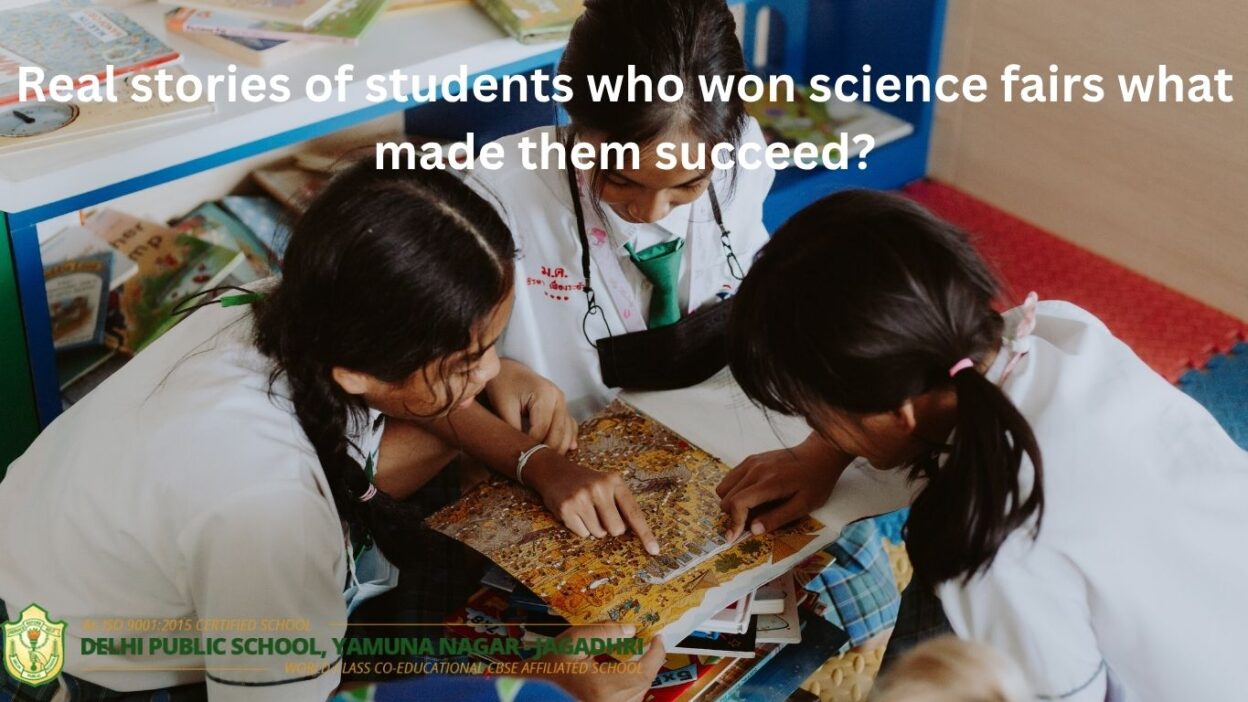
In today’s competitive academic landscape, science fairs are no longer just about flashy models or last-minute experiments. They’re powerful platforms for innovation, creativity, and real-world problem-solving. At Delhi Public School (DPS) Yamunanagar, one of India’s leading co ed schools, student science projects have consistently stood out at regional and national levels. But what drives their success? It’s more than just intelligence—it’s a nurturing environment, collaborative learning, and a deep-rooted culture of curiosity.
The Spark of Innovation at DPS Yamunanagar
DPS Yamunanagar has long championed experiential learning. The school encourages students not just to study science, but to live it. Through well-equipped laboratories, regular science exhibitions, and hands-on mentorship, students are exposed early to the excitement of research and innovation.
Take, for instance, Aarav and Sneha, Class 10 students whose student science project on water purification using eco-friendly materials won first prize at the Haryana State Science Fair. Their journey began with a simple question in their environmental studies class: “Can village water sources be purified using natural, local ingredients?” The support from teachers, availability of lab resources, and their ability to work as a team were the keys to their success.
Real Stories: Learning from the Best
1. Aarav and Sneha – Eco-Friendly Water Filter
Project Title: Natural Filtration Using Charcoal and Sand
These two budding scientists used activated charcoal made from coconut shells, combined with layers of sand and gravel, to build an affordable and sustainable water filter. Their project stood out because it addressed a real-world problem and proposed a practical, cost-effective solution.
What made them succeed:
- In-depth research supported by science mentors.
- Continuous trials and testing.
- Team collaboration—Aarav handled the technical design, while Sneha documented the process and presented the findings.
- Guidance from their teachers who helped refine their approach.
2. Radhika – Solar-Powered Cooking System
Project Title: Eco-Cooker: Harnessing the Sun
Radhika, a Class 12 student at DPS Yamunanagar, developed a compact solar cooking device designed for rural households with limited electricity access. Her prototype impressed judges for its practical design and potential for real-world impact.
What made her succeed:
- She combined physics and environmental science to create a multidisciplinary project.
- Her teacher introduced her to solar energy concepts in a way that sparked further exploration.
- Encouragement to work independently, which boosted her confidence.
- Real-time testing with families in nearby villages to validate her concept.
The Role of a Co Ed School Environment
Being a co ed school, DPS Yamunanagar fosters an environment where students of all genders work together. This inclusivity leads to better communication, broader perspectives, and balanced teamwork.
In Aarav and Sneha’s case, the coeducational setting encouraged mutual respect and collaboration. Both students brought unique strengths to the table, proving that gender-balanced teams can drive better problem-solving and creativity.
The benefits of co education are clearly reflected in the success stories of DPS Yamunanagar students:
- Enhanced communication skills: Students learn to express ideas clearly and listen to diverse viewpoints.
- Teamwork: Mixed-gender teams often simulate real-world work environments.
- Confidence building: Students gain the confidence to present their ideas in a supportive atmosphere.
- Mutual respect: Working together fosters understanding and empathy.
Faculty and Mentorship: The Backbone of Every Student Science Project
One of the most significant contributors to successful student science projects at DPS Yamunanagar is its dedicated faculty. Science teachers here are not just instructors—they are mentors who guide students through every step of the project development process.
Mentorship involves:
- Helping students identify research-worthy topics.
- Providing lab support and ensuring access to materials.
- Offering feedback during trial runs.
- Preparing students for presentations and viva rounds.
Faculty members also host mini workshops on research methods, scientific writing, and effective presentation—skills that are vital not just for winning fairs, but for future academic success.
Parental Involvement and School Culture
DPS Yamunanagar believes that science doesn’t stop at the school gate. Parents are often invited to exhibitions, where students display their models and prototypes. This involvement creates a culture of learning that extends beyond the classroom.
Moreover, the school regularly holds science and innovation weeks, where past winners mentor new students, sharing tips, pitfalls, and inspiration. This tradition of peer learning motivates younger students to start working on their projects early.
Infrastructure That Fosters Innovation
Winning science projects aren’t created in a vacuum—they need space, tools, and time. DPS Yamunanagar offers all three:
- State-of-the-art laboratories: Fully equipped for biology, chemistry, physics, and environmental science.
- Maker spaces: Dedicated areas for building prototypes with tools like 3D printers and soldering kits.
- Library access: Research support through journals, books, and digital resources.
- Time allocation: Extra hours after school and during weekends are set aside for project work.
The DPS Difference
What sets DPS Yamunanagar apart is its ability to blend academics with exploration. Students are not just taught to memorize concepts—they are trained to question, experiment, and innovate.
The combination of a co ed school setup, experienced faculty, and project-friendly infrastructure has made DPS Yamunanagar a hub for award-winning science talent. The benefits of co education are evident in how students collaborate, communicate, and create together.
Conclusion: Inspiring the Next Generation of Innovators
Science fairs are more than competitions—they’re milestones in a student’s educational journey. At DPS Yamunanagar, every student science project is a testament to curiosity, hard work, and a supportive environment. The real stories of students like Aarav, Sneha, and Radhika are not just about winning medals—they’re about solving real problems, embracing teamwork, and believing in their ideas.Parents looking to nurture a young scientist should consider a school that not only offers great academics but also understands the value of collaboration and creativity. DPS Yamunanagar, with its focus on holistic development and the proven benefits of co education, stands as a shining example of what’s possible when the right environment meets the right mentorship.

